
Grounded in science.
Called to clinical care.
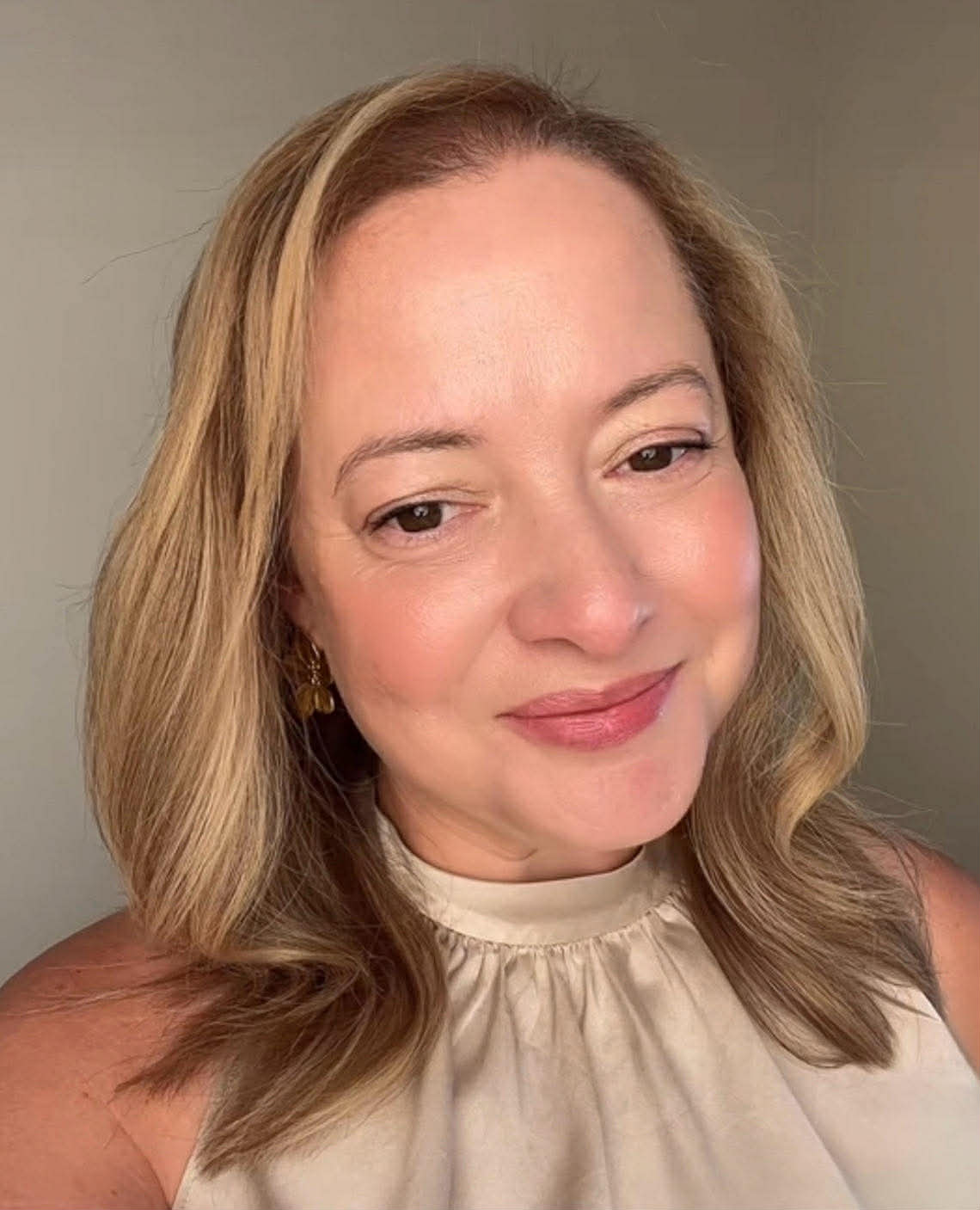
I am a Duke-trained, Board-Certified Women’s Health Nurse Practitioner with seven years inside reproductive endocrinology — the most hormonally complex field in medicine — and a scientific foundation built at the University of Washington in microbiology, genetics, and aging research. That training is the lens I bring to every appointment. It’s how I read a lab the way a scientist reads data: looking for the pattern beneath the number, the interaction beneath the result.
I grew up in Brazil in a household shaped by science. My mother was a pharmacist. Medicine was always part of the conversation, and I came into this work with the instincts of someone raised to ask why — and to keep asking until the answer holds up.
At 24 I moved to the United States. What followed — three sons, pregnancy, postpartum, and navigating American healthcare from both sides of the exam table — taught me something the science never could. I saw, firsthand, how rarely women are given the time to be understood. How quickly concerns are dismissed. How thoroughly the system is built around speed instead of depth. That experience is what brought me to women’s health as a clinician — not by accident, but by conviction. I wanted to be the provider I had been looking for: one with the scientific depth to understand what was happening in a woman’s body, and the willingness to sit with her until it made sense. Women’s Preventive Care is the practice I built from that conviction — and from years of watching women like you, like my friends, like myself, be sent home with answers that did not match what their bodies were saying.
I want you to know something: Your symptoms are real. Your instincts about your own body are usually right. And the reason no one has been able to explain what is happening to you is almost never because there is nothing to find — it is because no one has had the time, or the training, or the willingness, to look.
That is what I do here. I bring rigorous science and unhurried attention to the same room — in English or in Portuguese, in the office in Orlando or by telehealth across Florida, Washington, and California. Whether you are thirty-two and something feels off, or forty-eight and exhausted by being dismissed, you will be met with the depth this work actually requires.
This is not the clinic I found. It is the clinic I built because it needed to exist — and because you deserved it long before you arrived here.
Schedule a ConsultationNot a typical
GYN appointment.
A standard GYN visit is built around screening — a Pap, a brief check-in, a referral if something looks off. That model wasn’t designed for women whose hormones are shifting, whose energy has changed, whose labs come back “normal” while nothing about how they feel is. This practice is.
A typical GYN visit is 15 minutes — and then another appointment to hear about your labs. Yours is a full hour with your results already in hand. That’s not a perk — it’s how long it actually takes to read your chart, review your labs the way they deserve to be read, and understand what your body has been trying to tell you.
Most appointments stop at “your labs are normal.” Mine starts there. We look at what the numbers mean for you — your patterns, your symptoms, your history — instead of the average woman they were referenced against.
A typical visit aims to rule things out. Ours aims to build a plan you can actually live with — one that addresses why you feel the way you feel, and gives you a path forward you understand and trust.
Years of training built
for exactly this.
The way I practice didn’t come from one program. It came from a microbiologist’s training in how the body works at the molecular level, a graduate nurse practitioner program at Duke, and seven years inside reproductive endocrinology — the most hormonally complex field in medicine.
Heard at the level of your biology — not just your symptoms.
Hot flashes, fatigue, brain fog, weight changes — these aren’t moods to manage. They’re signals from a body whose hormonal landscape is shifting. My background in microbiology and aging research at the University of Washington means I read your labs the way a scientist reads data: looking for the pattern beneath the number, the interaction beneath the result.
Two women with identical labs can feel entirely different — and that difference is where I start.
Seven years watching how women’s hormones actually behave.
Reproductive endocrinology is the most hormonally complex field in medicine. For seven years I worked with women whose cycles were being measured, mapped, and adjusted in real time. That’s where I learned what no textbook teaches: how perimenopause begins quietly, why your symptoms are real even when standard labs look fine, and how to tailor a plan to your body — not the average one.
When you tell me what you’re feeling, I already have a framework for what your hormones might be doing.
The way I think
is the way I treat.
Training tells you what’s possible. How you think with that training is what your patient actually feels. These are the principles that shape every decision I make in your care.
Evidence over trend
NAMS guidelines. Peer-reviewed research. Your individual labs. Those are the three things that drive every decision in your care — not what’s trending on social media, not protocols designed for the average patient, and not a one-size-fits-all algorithm. If a treatment doesn’t have evidence behind it for your situation, I’ll tell you. If newer evidence changes my recommendation, I’ll tell you that too.
Receptor-level thinking
Hormones aren’t just numbers on a panel — they’re molecular signals. Estrogen, progesterone, and testosterone interact at the receptor and gene-expression level, which is why two women with identical labs can feel entirely different. I treat hormones the way they actually work in your body, not the way they look on a printout.
Genetics influence everything
Your individual variation in hormone metabolism, receptor sensitivity, and how your body processes medication is largely genetic. That’s why a treatment that worked beautifully for your friend or sister may not work for you — and why the plan we build together is built around you, not a population average.
Why insurance can’t deliver this care
Insurance reimburses GYN visits at a rate that forces a 15-minute model. Fifteen minutes cannot accommodate a full chart review, a real conversation about your symptoms, a thoughtful interpretation of your labs, and a tailored plan — let alone the ongoing follow-up that hormonal care actually requires. The insurance model is also episodic by design: you’re seen, coded, billed, and discharged until your next problem. Hormonal health doesn’t work that way. It needs continuity. Going private-pay isn’t a luxury choice — it’s the only structure that allows the time, the depth, and the ongoing relationship this kind of care demands. You know exactly what you’re paying. You know exactly what you’re getting. And nothing about your care is being shaped by what a billing code allows.
Bilingual, bicultural care
Atendimento completo em português. The consultation, the care plan, and every piece of communication happen in the language you feel most yourself in — because nuance matters in medicine, and you should never have to translate how you feel.
Where this experience
was built.
The science, the years in REI, and the way I practice were built inside specific institutions — places that shaped how I read labs, how I listen, and how I build a plan with a patient.
- University of Washington · Seattle, WA · Bachelor of Science in Microbiology.
- Duke University · Durham, NC · Graduate Nurse Practitioner program.
- Stanford University · Stanford, CA · Clinical training in women’s health and reproductive medicine.
- University of California (UCSF) · San Francisco, CA · Clinical training in women’s health and reproductive medicine.
- Pacific Northwest Fertility · Seattle, WA.
- University of California (UCSF) · San Francisco, CA.
- RMA of Northern California · San Francisco, CA.
- The IVF Center · Orlando, FL.
Seven years inside high-volume, high-complexity practices — where I saw, every day, how individually each woman responds to the same hormones. That’s the experience I now bring to your appointment.
The difference they
felt on day one.
Women often arrive having already seen multiple providers. What they describe most consistently is not just feeling better — it’s finally feeling understood.
See all Google Reviews →Today, after 6 years living in the USA, I had one of the best experiences as a woman going through the difficult challenges of menopause. I received feedback on my blood tests that I had never received before. It was worth every penny and every mile I traveled to be seen by her.
Luciana is very thorough. We talked in depth about everything that has been bothering me and reviewed past test results to investigate possible causes. She truly seeks to understand the root of the problem, not just treat the symptoms.
Luciana is amazing — kind, knowledgeable, and truly caring. She made me feel comfortable, heard, and supported every step of the way. One of the best care I have had in this country.
A community of women asking better questions.
Perimenopause Q&As, hormone myths debunked, and behind-the-scenes from the practice. Real answers, no scare tactics, no stock photos.
Follow on Instagram
The science. The experience. The time
to truly listen to you.
An hour that’s actually yours. A clinician who actually reads your chart before you walk in.
Care plans built around your biology, your history, and your goals — backed by the training to make them work.
In-person in Orlando, or via telehealth in Florida, Washington State, and California.
Telehealth available in Florida · Washington State · California · By appointment only